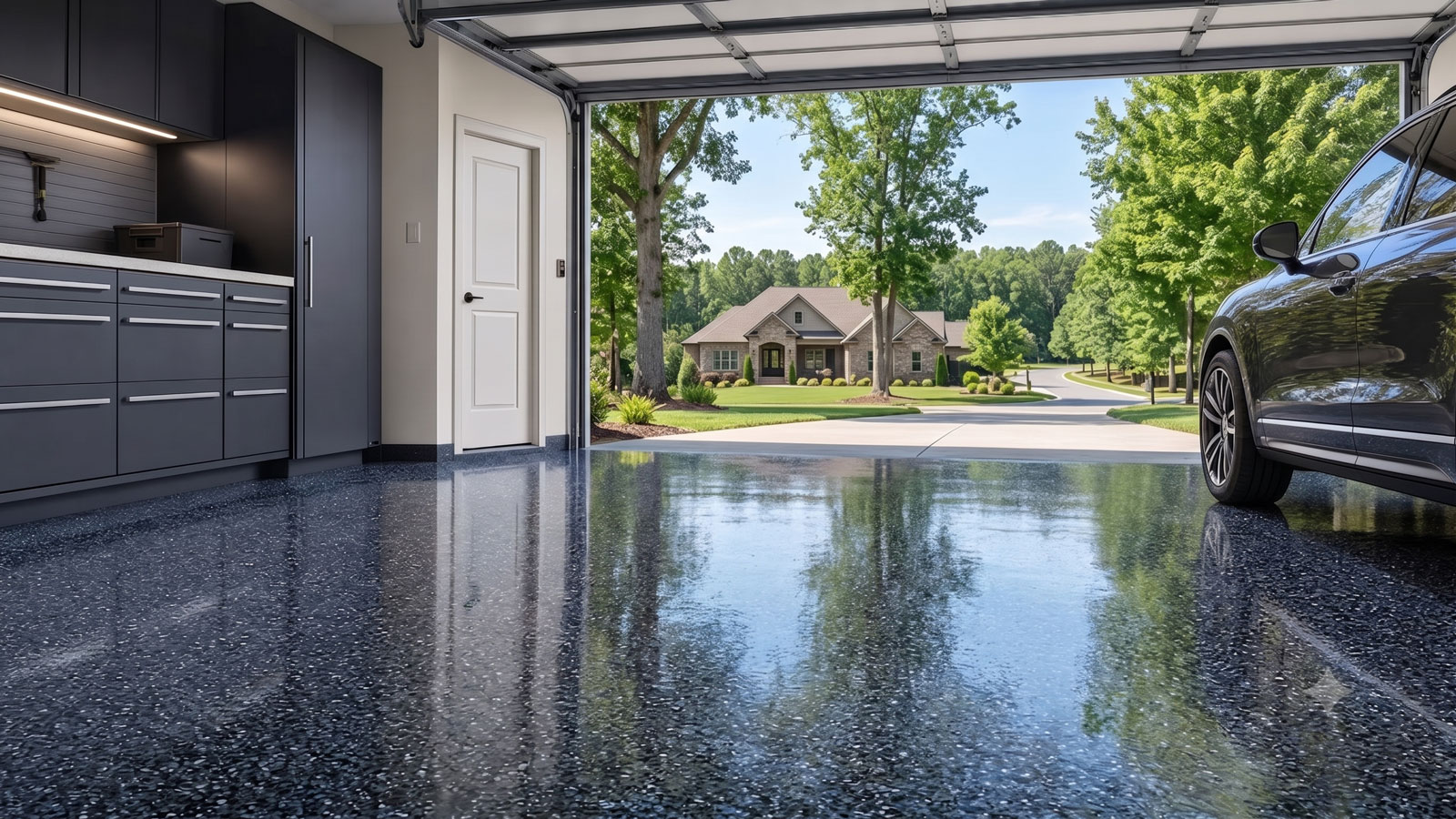
Garage Floor Coating in Birmingham, MI
Floor Coating Information in Birmingham, MI
Birmingham, Michigan, has a documented tradition of citywide master plans reaching back to 1929, and its 2040 Master Plan process began with public engagement in spring 2019. The city uses that planning framework to evaluate mature neighborhoods and changing commercial corridors. This development history distinguishes Birmingham from rapidly expanding suburban areas, but it cannot tell homeowners whether a concrete garage floor is original, repaired or recently repoured.
Winter deicing is a separate practical concern. Snow and slush carried by vehicles can leave road-treatment residue and grit on floors throughout the colder months. A coating on sound properly prepared concrete may make cleanup easier, but it cannot stop structural movement or correct water entering through an improperly sloped driveway. Those conditions require specific inspection.
Before selecting epoxy, polyaspartic or decorative-flake finishes, Birmingham homeowners should ask about existing paint, curing treatments, oil exposure, surface strength, cracks and moisture suitability. A detached garage in an established street may have different access needs from a modern attached bay, but the quote should follow observed conditions rather than neighborhood prestige or generalized age.
Local Market Insight
Birmingham's citywide planning record extends to 1929, while its 2040 Master Plan engagement began in 2019. This long-established neighborhood context differs from newer suburban construction, and Michigan road maintenance provides a distinct winter-coating consideration.
What Affects the Cost of Garage Floor Coating in Birmingham?
Garage floor costs in Birmingham depend on the history and shape of the actual concrete. An older house may contain a much newer slab, while a renovated garage may still carry earlier layers of paint and oil.
The contractor should itemize mechanical preparation, repairs, edge details and any moisture issue, then compare complete finish systems and curing rather than relying on a generic premium-neighborhood price.
- Historic neighborhood slab history: Birmingham's mature streets include many buildings that have changed over decades. Verify garage additions, repours, old paint and repair history rather than assuming house age equals slab age.
- Winter road residue: Michigan deicing materials can be tracked into daily-use garages. Prepare the old substrate to remove contamination and establish cleaning habits for the new finish.
- Detached garage and access: Traditional detached garages may have steps, narrow doorways or tight work areas. Equipment staging, perimeter grinding and storage clearance affect scope.
- Cracks, patches and movement: Assess pitting, crack stability and old repairs before coating. A decorative topcoat cannot stop ongoing structural movement or replace necessary concrete repair.
- Moisture and driveway runoff: Rain or snowmelt at the entrance is not the same as internal slab moisture. Identify the water path before selecting a product or assuming a coating will fix drainage.
- Finish, texture and cure: Color flakes, topcoat chemistry, UV exposure near doors and manufacturer curing requirements affect cost and maintenance. Compare the full system, not a marketing term.
Call for a clear, project-specific estimate—or request one online.
Birmingham's Long Planning Record and Changing Private Garages
Birmingham's 2040 Master Plan initiative describes a local history of citywide planning dating to 1929. Public engagement for the newer plan began in spring 2019 with roundtables and design discussions, followed by drafts and review. The city uses master planning to weigh existing neighborhood character, commercial centers and future changes. These are distinctive civic records but not direct evidence about a slab.
A house on a mature Birmingham street may have an attached garage modified later or a detached structure with a replacement floor. Ask when the concrete was placed and whether it received paint, sealer or repairs. A garage used for workshop projects can retain oil and other materials even when it looks clean after routine washing.
Professional surface profiling should remove incompatible coatings and prepare sound concrete for the selected resin. Crack repairs and moisture evaluation should follow observed conditions, and evidence of movement or structural damage may require another specialist. Neither a premium system nor an attractive topcoat can overcome a poorly prepared base.
A comparable proposal includes clearing belongings, grinding, old-coating removal, repair scope, edge details, layer sequence and curing. The document should explain changes in price that arise from actual concrete needs, not simply the prestige of a Birmingham address.
Winter Residue and Birmingham Garage-Floor Maintenance
Michigan transportation agencies publish winter-plowing and salt-use information, and Birmingham residents regularly drive roads exposed to deicing materials. Salt, slush, road grit and melting snow can be carried directly into a garage. That is a regional fact with practical implications for cleaning, but it does not diagnose the degree of wear on a particular floor.
Before coating, inspect salt deposits, loose surface material, old finishes and cracking. Remove contamination and create the necessary profile. Where the garage experiences recurring wetness, distinguish tracked water from driveway drainage or suspected slab moisture, and evaluate product suitability accordingly.
After a suitable coating is installed, routine sweeping and cleaning may become easier than on unfinished concrete, especially in a garage used every day. The coating will not prevent winter residue, so maintenance remains important. A driveway graded toward the house should be corrected separately, not treated as a flooring issue.
Choose the texture and topcoat around real use: parking, rolling equipment, storage and wet shoes. Ask for a sample and cleaning guidance, and plan installation around temperature limits and the full cure period before returning cars.
Frequently Asked Questions
Does a 1920s-era Birmingham house necessarily have a 1920s garage floor?
No. Garages can be built or repoured much later, and a floor's condition depends on its actual concrete, repairs and earlier finishes.
Can decorative flakes prevent salt stains completely?
A suitable coated finish may make cleanup easier, but road salts and slush still enter and require routine removal. Existing contamination must be addressed before installation.
Will polyaspartic stop concrete cracks from growing?
No. Any active movement needs evaluation. Stable surface defects can sometimes be repaired, but resin chemistry does not stabilize a moving slab.
Do I need a special coating for a detached garage?
The appropriate system depends on concrete, moisture conditions, use and temperatures rather than attachment alone. Access and edges can also change preparation scope.
What should a Birmingham bid explain?
Request grinding, coating removal, crack and patch work, moisture checks when appropriate, complete system layers, texture, cleanup and vehicle-return restrictions.