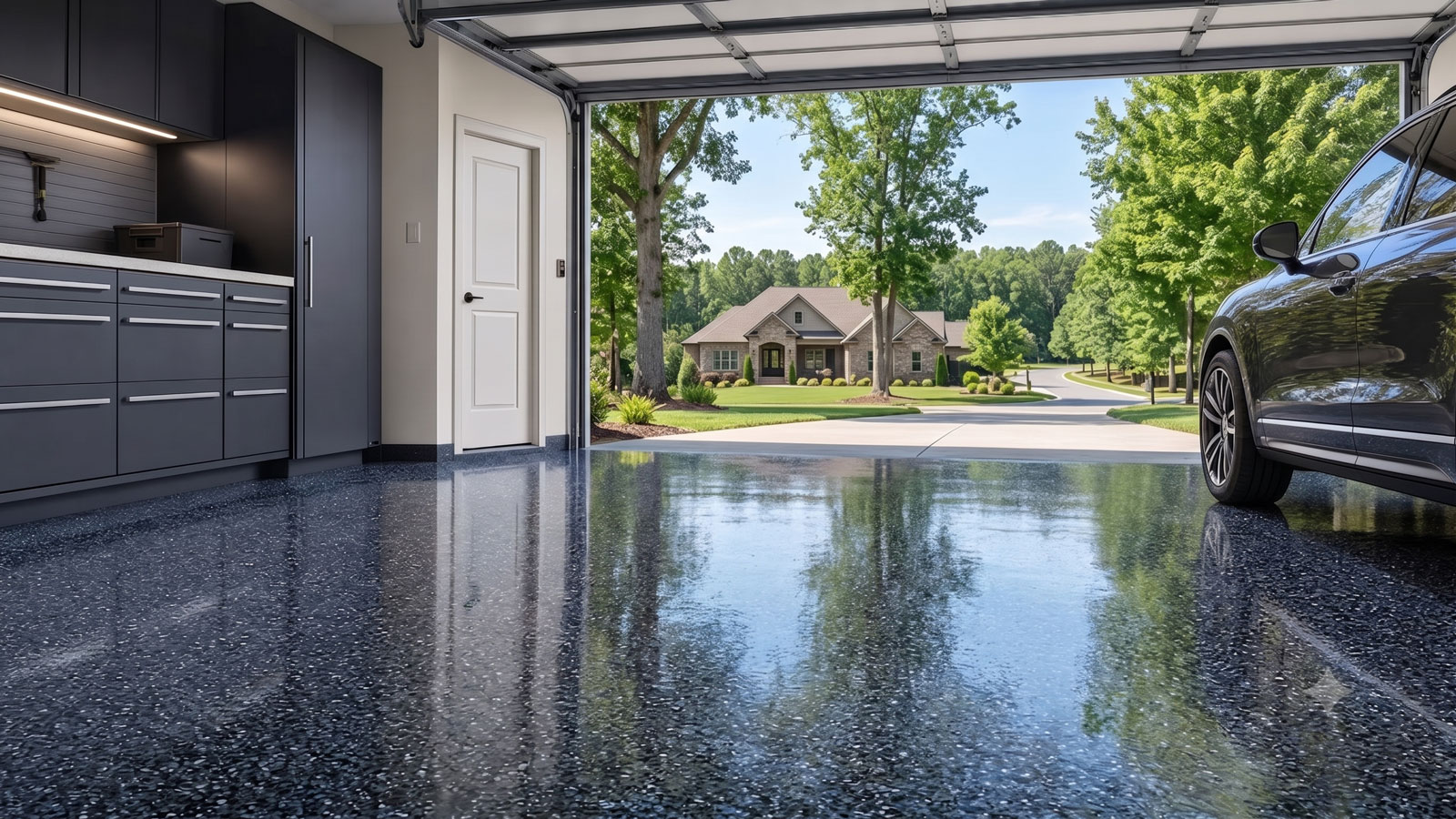
Garage Floor Coating in Plymouth, MI
Floor Coating Information in Plymouth, MI
Plymouth's municipal planning and historic-preservation record provide a different context from nearby suburban townships. Its City Commission approved the 2025 Master Plan on October 20, while the city separately maintains a Kellogg Park Historic District and a community development office responsible for permits, code enforcement and housing inspections. Those facts point to a compact established city with buildings altered across many years; they do not prove that a garage slab is original to its house.
Michigan winters make salt and snowmelt relevant for floor maintenance. Vehicles returning from salted roads can deposit grit, meltwater and deicing residue, especially along garage doors and tire paths. A properly prepared coating can simplify cleaning, but it will not redirect a driveway's slope or prevent structural movement. Water tracked indoors is not the same as a leak or persistent slab moisture.
A Plymouth homeowner may have an older detached garage, a newer addition or a repoured floor hidden by previous paint. Before choosing epoxy, polyaspartic or decorative flake, evaluate actual surface soundness, prior coatings, repairs and substrate moisture. The estimate should describe grinding and the complete coating and curing sequence rather than relying on neighborhood charm or a fast-cure promise.
Local Market Insight
Plymouth's City Commission approved a new Master Plan on October 20, 2025, and the city maintains the Kellogg Park Historic District with separate building and inspection functions. Winter road-treatment residue adds an independent practical coating concern.
What Affects the Cost of Garage Floor Coating in Plymouth?
Historic and modified Plymouth properties can have different concrete histories, access and previous finishes. A detached garage with paint may need more preparation than a newer bare slab of the same area.
Winter grit should be handled through pre-coating cleanup and future maintenance, while active threshold inflow needs its own drainage review. Ask the installer to specify all work instead of pricing from the garage's real-estate label.
- Later additions and repours: A house in an established Plymouth neighborhood may have a newer garage or replacement slab. Inspect its real surface rather than treating historic building appearance as concrete age.
- Old paint and coatings: Garage paint, penetrating sealer and automotive oil can obstruct adhesion. A quote should include appropriate mechanical removal and profiling before applying the new system.
- Winter deicing grit: Michigan roads receive deicing products; parked cars carry residues inside. Check pitting and embedded dirt during preparation, and establish a routine to remove deposits after installation.
- Cracks and drainage: Inspect joint movement, patches and water from the driveway or gutters. A decorative floor cannot repair structural movement or a poorly drained threshold.
- Detached garage access: Older footprints may have narrower doors, irregular edges or crowded storage. Plan for grinding equipment, debris and a clear surface rather than assuming all square footage is equally accessible.
- Texture and cold-season cure: Color flakes, topcoat texture and manufacturer temperature requirements influence cost and return-to-use. An installer should explain winter scheduling and how long vehicles remain outside.
Call for a clear, project-specific estimate—or request one online.
Plymouth's 2025 Master Plan and Historic Neighborhood Garages
The City of Plymouth's Community Development Department reports that the City Commission reviewed and approved a new Master Plan on October 20, 2025. The department also administers the Kellogg Park Historic District, building inspections and code compliance. This combination of up-to-date planning and preservation makes Plymouth a useful example of a mature city adapting its existing built environment, rather than a subdivision built in one period.
For a garage floor, the home's apparent age is not enough. The garage may be detached, added after the home or have a slab poured years later. Ask about past renovations and inspect previous paints, cracks, patches and edges. Surface preparation should be specified to meet the chosen resin system's requirements, not adjusted to match a generalized idea of historic property.
A floor that looks newer can still contain sealer or curing material. A floor that has aged may remain structurally sound after suitable repairs. The installer should separate cosmetic crack filling from evidence of ongoing movement, and should not promise that coatings can stabilize an unsound slab.
Where a proposed project changes visible historic exterior elements, check city approval requirements separately. For an interior garage finish, compare contractors using the preparation, repair, layers, texture and curing documented in the bid.
Snowmelt at the Garage Door and Plymouth's Daily Parking Needs
Michigan DOT documents salt and plowing as parts of its winter road-maintenance program. That makes salty slush tracked in by cars a credible issue in Plymouth. It does not show that every home has pitting or moisture damage; homeowners should assess actual residue and deterioration on the specific floor.
Before applying epoxy or polyaspartic, remove old coatings and contamination and mechanically prepare the concrete. If the garage is frequently wet, determine whether the source is vehicle tracking, outside runoff or moisture within the slab. These pathways require different responses and may affect whether the floor is suitable for the planned product.
After coating sound concrete, a continuous finish may be easier to sweep and clean, but salt and water still arrive in winter. The finished surface should have a texture that suits wet shoes and tire traffic without becoming unnecessarily difficult to wash. Ask to see a full-flake sample rather than deciding from a photograph.
A driveway draining toward the garage must be addressed as a grade or drainage question, not a resin-coating feature. Agree on realistic cure restrictions, especially for winter installations when temperatures can limit the manufacturer's recommended application conditions.
Frequently Asked Questions
Does Plymouth's historic district mean the garage floor is historic too?
No. A garage or slab can be installed later than the house. Assess concrete condition, past coatings and repair history directly before deciding a coating is appropriate.
Can epoxy protect a garage from tracked-in road salt?
A sound coated floor may be easier to clean, but road salt and slush still require removal. Preparation must also address residue already present before installation.
Will a floor finish repair water coming under the garage door?
No. Exterior grade, drainage and threshold concerns need separate attention. A decorative coating cannot redirect water or stop active leaks.
Is a fast topcoat enough to finish in one day?
Not always. Grinding, repairs, application conditions and product-specific cure time all affect the schedule. Ask when vehicles can safely return.
What should my Plymouth estimate include?
Look for concrete inspection, old-finish removal, grinding, crack treatment, moisture evaluation if indicated, full layers, texture, cleanup and maintenance guidance.