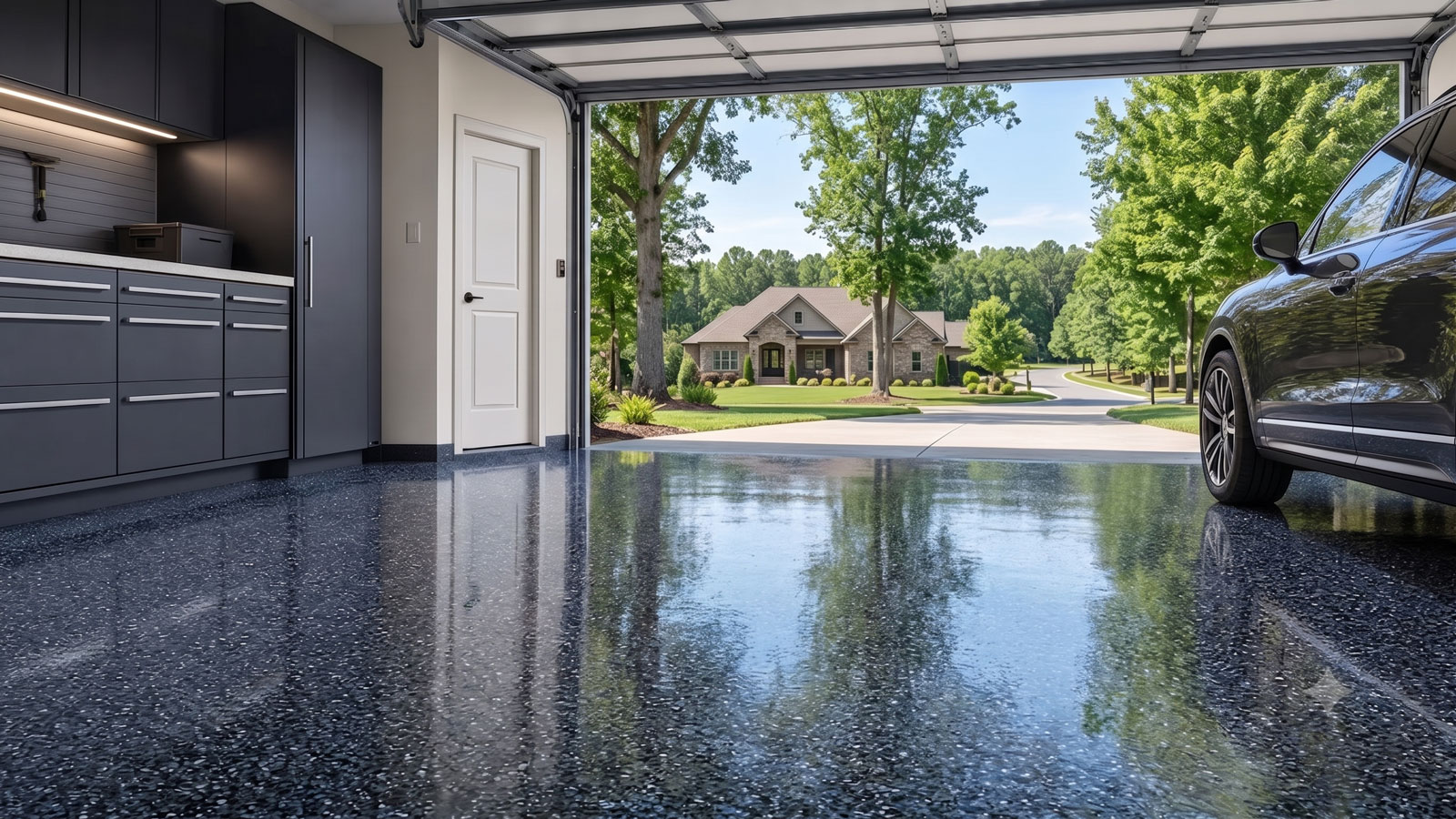
Garage Floor Coating in Northville, MI
Floor Coating Information in Northville, MI
Northville's historic character is a documented part of the city's identity, not merely an advertising adjective. The city surveyed historic properties in 1972, adopted its preservation ordinance in 1974 and conducted another intensive survey in 2018. At the same time, Northville Township has separate planning and land-use functions outside the small incorporated city. That jurisdictional distinction is important when describing the area, but neither an old streetscape nor a municipal boundary reveals the age of the concrete inside a garage.
Michigan winters introduce a second real factor. State and local road crews use salt and other deicing measures, and cars can carry slush, grit and salty meltwater onto a garage floor. Where homeowners store tools or park regularly, maintenance and traction should inform finish selection. But a coating cannot stop water from flowing downhill toward a threshold or stabilize a slab with active movement.
Some Northville garages are detached additions or later modifications to older houses, while township homes may have more recent configurations. Before specifying epoxy, polyaspartic or decorative flake, ask about previous paint, repairs, curing and concrete moisture. A complete installation plan should explain grinding, substrate suitability, repairs and how long vehicles must stay out.
Local Market Insight
Northville's preservation record includes a 1972 survey, 1974 historic ordinance and 2018 survey, while Northville Township administers its own land-use planning. Michigan road-treatment practices provide a separate winter maintenance theme; neither proves a garage slab's condition.
What Affects the Cost of Garage Floor Coating in Northville?
Northville estimates can vary between garages associated with historic houses and newer township properties, but those labels do not determine concrete age. A later repour, old paint, oil or surface deterioration may be the larger cost driver.
Winter debris and moisture should be handled in preparation and maintenance planning. The contractor should record actual damage, threshold conditions, grinding, repairs, chosen texture and realistic curing rather than a standard square-foot number alone.
- Slab history in historic properties: A Northville garage could have been added or repoured after its house. Inspect actual concrete, earlier coatings, patches and surface strength instead of deriving prep costs from the home's architecture.
- Salt and winter contamination: Vehicles carry regional road-treatment residue into garages. The existing slab needs appropriate cleaning and profiling before coating; contamination hidden within old porous surfaces can change labor.
- Cracks and freeze/thaw exposure: Identify stable cracks, pitting, spalling and any movement. A coating may improve cleaning of sound concrete but cannot halt structural deterioration or stop moisture-induced damage by itself.
- Door slopes and meltwater: Snowmelt from vehicles is ordinary garage exposure; water entering from the driveway or roof drainage is a different issue that may require separate corrective work.
- Garage access and edges: Detached garages, transitions, storage cabinets and steps can add setup and edge treatment. Measure the actual working area and plan where equipment and household vehicles will go.
- Finish, temperature and return time: A decorative flake topcoat with appropriate texture must match the use. Manufacturer temperature and curing limits may affect winter scheduling more than the advertised product category.
Call for a clear, project-specific estimate—or request one online.
Historic Northville and the Difference Between House and Slab Age
The City of Northville's preservation program dates to a historic-property survey in 1972 and the adoption of a Historic Preservation Ordinance in 1974. A more intensive survey followed in 2018. The city's Historic District Commission reviews certain construction, exterior alterations and demolition activity. These are specific civic facts about architectural stewardship, not evidence that every garage floor in an older neighborhood is original.
An older house may contain a garage added decades later, and a garage may have received a replacement slab after construction. Ask about available building history, prior paint and repairs, and inspect actual cracks, patches, wear and surface strength. The relevant materials for a coating are the concrete and previous surface treatments, not historic-district aesthetics.
Northville Township maintains its own planning service and land-use processes, so a suburban property just beyond the city may have a different development context. Yet a newer garage can still contain curing compounds or sealers, and even a sound-looking floor generally needs appropriate mechanical surface profiling before a coating system.
If the project proposes changes to visible historic exterior elements, homeowners should separately verify permitting obligations. The interior floor proposal should remain specific to inspection, grinding, repair, moisture suitability, layer selection and return-to-service instructions.
Snow, Deicing Residue and a Northville Garage Floor
Michigan's transportation department documents winter salt use on state roads and publishes winter maintenance information for residents. Across southeastern Michigan, tire-carried snow, grit and brine are realistic garage conditions. This is not a reason to assume every Northville floor is damaged; it is a reason to discuss how the actual floor is cleaned before and after coating.
Prior to installation, remove or address existing contaminants, old finishes and weak concrete. Inspect for surface pitting and cracked areas rather than simply washing the slab and applying a glossy layer. If moisture is suspected within the concrete, ask about suitable testing and the planned system's allowable conditions.
A properly prepared continuous finish can make tracked winter debris easier to sweep or wipe away. It cannot prevent cars from depositing salt or snowmelt, and it cannot make structural cracks inactive. Routine winter cleaning still matters, especially around door edges and standing water.
Check how a household uses its garage in colder months. Texture, cleaning, finish layers and cure conditions should be chosen together. If the garage must remain available for daily parking, the installer should explain when the floor and air temperatures allow safe application and how long the coating actually needs before vehicles return.
Frequently Asked Questions
Does a historic Northville home mean its garage concrete is from the 1800s?
No. Historic house age and slab age are unrelated without property documentation. Garages can be added, repoured or repaired much later; the actual concrete should be assessed.
Can a coating protect against Michigan road salt?
An appropriate system may make cleanup easier on a sound floor, but vehicles still bring salt and slush. Surface contamination must be addressed before installation and removed during regular maintenance.
Will epoxy stop freeze/thaw cracking?
No. A coating cannot arrest active concrete movement or correct structural problems. Existing cracks and spalling require inspection and appropriate treatment first.
Should I choose polyaspartic to get cars back sooner?
Not solely for that reason. Grinding, repairs, application conditions and the complete system's cure requirements determine actual downtime. Ask for the manufacturer's return-to-service limits.
What should a Northville bid explain?
Request prior-finish removal, mechanical grinding, repairs, moisture checks if indicated, edge work, complete coating layers, texture and clear parking restrictions.