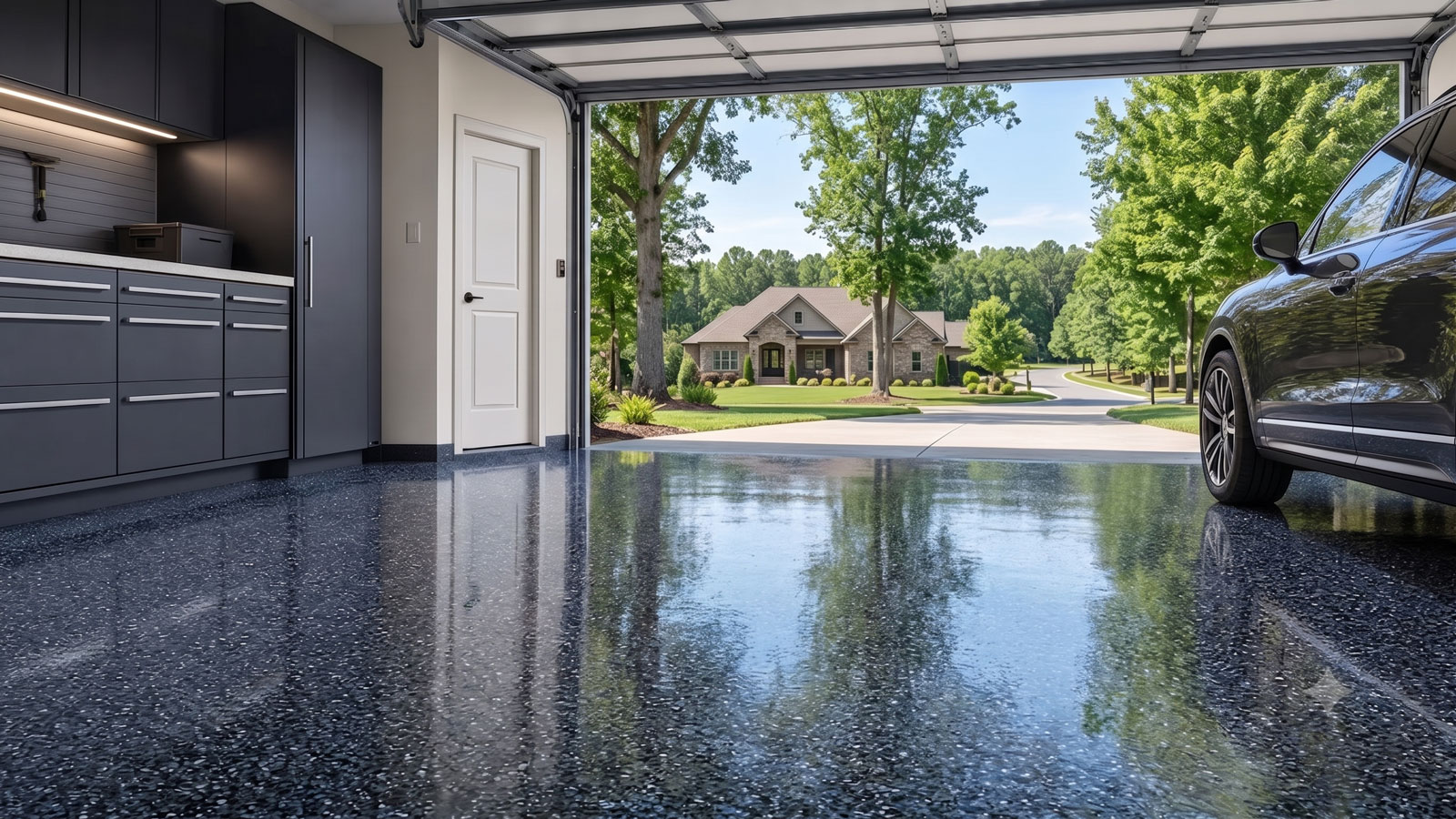
Garage Floor Coating in Detroit, MI
Floor Coating Information in Detroit, MI
Detroit's public works department describes a three-level winter-response system, with road salt used after snowfall and liquid salt brine or calcium chloride applied before icy conditions. That creates a real potential for vehicles to carry slush, grit and deicing residue into city garages. The city's residential buildings also reflect a long history of construction and reinvestment. Detroit's demolition program reported its 6,000th residential demolition after Proposition N in April 2024, a sign of widespread property change—not proof that the slab of any surviving home is damaged.
Garages and workshops can vary in age, past uses and concrete repairs even along the same block. A later-built detached garage or replacement floor may be newer than a century-old house, while a commercial-style workspace could contain old sealers, paints and oil. Concrete should be assessed for actual surface strength, cracking and moisture before choosing an epoxy, polyaspartic or flake finish.
Detroit winters make post-installation cleaning and pre-installation salt removal both important. A sound coating can help a floor shed ordinary grime when the substrate is appropriately prepared, but it cannot stop freeze/thaw-driven structural movement or correct drainage into a garage. Ask an installer to itemize surface grinding, contamination treatment, repairs, topcoat choice and realistic curing requirements.
Local Market Insight
Detroit DPW explicitly uses road salt, liquid brine and calcium chloride for winter roads. The city reported its 6,000th Proposition N demolition in April 2024. These facts establish winter residue and changing housing context without diagnosing any particular floor.
What Affects the Cost of Garage Floor Coating in Detroit?
Detroit garage projects can involve older workspaces, garages added decades after their houses, or newer slabs. Preparation cost depends on prior paint, oil, concrete soundness and the actual repairs needed—not simply address or building age.
Winter salt accumulation should be cleaned and evaluated before coating. A useful quote distinguishes contamination and routine repair from moving concrete or drainage problems that need different attention.
- Old paint or automotive residue: A garage previously used for vehicle repair may have oil penetration, layered paint or worn epoxy. Contaminant removal and mechanical grinding add work beyond a simple surface rinse.
- Slab and house construction dates: The age of a Detroit house does not establish when its garage concrete was poured. Inspect patches, joint movement and surface strength rather than assuming all older neighborhoods contain failing slabs.
- Winter deicing deposits: Detroit's documented road-salt and brine practices mean vehicles can bring residue into garages. Clean and prepare existing concrete properly; a new finish cannot be reliably bonded over contamination.
- Snowmelt and door drainage: Water from parked cars is different from an exterior grading or threshold leak. If water repeatedly enters from outside, address that cause before decorative coating.
- Storage, steps and irregular edges: Detroit attached or detached garages can include utility areas, workbenches and narrow access. The floor must be fully cleared and all edges prepared, not just the open parking footprint.
- Coating and cure conditions: The chosen flake blend, texture, UV behavior and temperature limits affect both price and the installation window. Compare complete systems and permitted return-to-vehicle times.
Call for a clear, project-specific estimate—or request one online.
Detroit Housing Changes and the Concrete Under the Garage
Detroit has a distinctly varied residential building stock and ongoing reinvestment. In April 2024, the city's Construction and Demolition Department marked the 6,000th residential demolition completed since its Proposition N program began. The program's wider aim was to remove some buildings while preserving or selling others. That documented municipal initiative illustrates significant change in the city, not a prediction about the condition of a garage on any particular street.
A detached garage may date from a later period than the house, and existing concrete may have been repoured or repeatedly repaired. When a homeowner asks for epoxy, the contractor should first determine what surface is present: bare or painted, sound or deteriorating, patched or moving, clean or contaminated. A garage with decades of oil exposure can require different preparation from a newer slab with an invisible sealer.
Visual appearance is not enough. Professional mechanical preparation should produce an appropriate profile, and weak concrete or incompatible coatings need removal. Structural movement, recurring water entry or serious slab damage should be identified as separate problems rather than hidden under decorative resin.
Compare bids by asking for specific grinding, removal, crack treatment, surface suitability checks and the full coating sequence. A detailed proposal protects homeowners from purchasing a visually attractive finish whose preparation assumptions do not match the real floor.
Road Salt, Freeze/Thaw and Detroit Garage Maintenance
Detroit's Department of Public Works documents three levels of winter weather response, with salt applied to major streets in lighter events and more extensive plowing during severe storms. Its website also describes anti-icing with liquid salt brine and calcium chloride. Those are directly relevant deicing practices: after winter driving, vehicles can leave meltwater, fine grit and chloride residue on a garage floor.
The important coating question begins before installation. Old dirt, paint, oil and salt-bearing deposits should be dealt with through appropriate cleaning, concrete assessment and surface preparation. Where a slab has pitting or movement, evaluate and repair those defects instead of assuming a smooth coating will stop further deterioration.
Once a complete system is installed on sound concrete, a continuous finish may make sweeping and rinsing winter debris easier than on porous unfinished concrete. It does not eliminate snowmelt or remove the need for cleanup. Nor will it change a driveway that sends water under the overhead door.
For homeowners with daily cars and gear, texture and maintenance matter. Ask for a sample of the proposed flake and topcoat, discuss how it will be cleaned, and find out when the manufacturer's instructions permit vehicle traffic after wintertime application conditions.
Frequently Asked Questions
Does Detroit's road-salt program make garage coating necessary?
No. It makes tracked salt and slush a credible maintenance issue, but homeowners should evaluate their existing floor and needs. Any coating requires proper removal of contaminants beforehand.
Does an older Detroit house mean its garage slab is too old?
No. Garages may have been built or repoured later. Inspect actual concrete strength, old finishes, cracks and moisture before deciding whether a coating is suitable.
Will coating eliminate winter salt cleanup?
No. Vehicles still bring salts, grit and water inside. A sound coated finish may be easier to clean, but residue should not simply be left on the surface indefinitely.
Can epoxy stop driveway snowmelt from entering a garage?
No. If water flows in through a doorway, driveway grade or drainage needs separate correction. A floor coating does not redirect exterior water.
What should a Detroit installer include in the quote?
Request surface preparation, old-coating removal, contamination treatment, crack repairs, moisture checks if indicated, texture and topcoat layers, and the correct cure schedule.