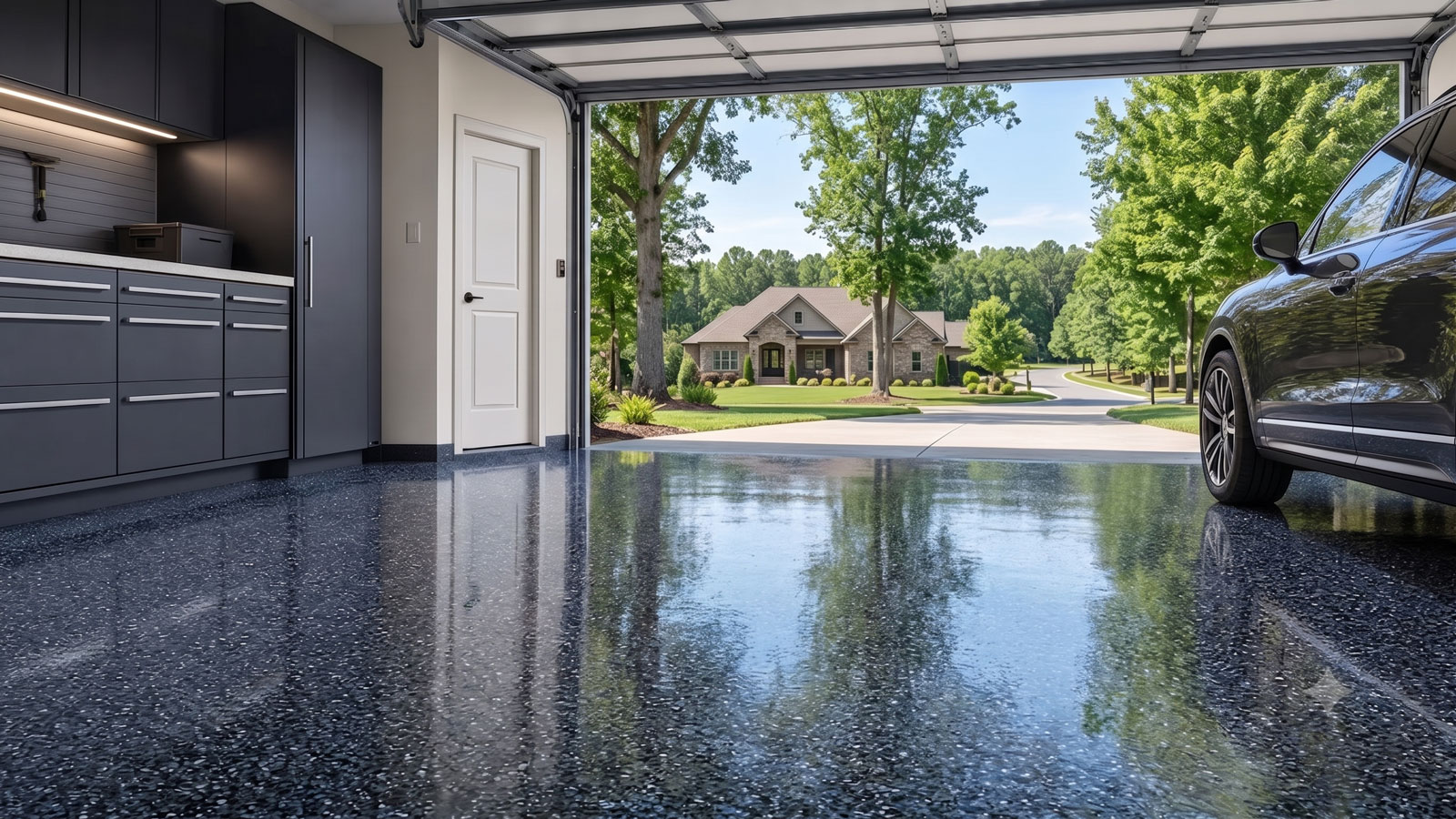
Garage Floor Coating in Canton, MI
Floor Coating Information in Canton, MI
Canton Township's adopted 2025 Master Plan discusses the relationship between residential growth, transportation, waterways and drainage. Its planning materials explicitly note that impervious surfaces change runoff patterns and that floodplains and wetlands need consideration during development. This is a meaningful local fact in a large charter township with neighborhoods from multiple eras, but it is not a test of a homeowner's garage concrete.
Winter is the second practical issue. Michigan road crews apply salt and other treatments, so vehicles can carry slush, grit and chloride residue directly onto garage floors. The concrete may also have earlier paint, curing compounds or cracks from construction and use. A properly installed epoxy or polyaspartic system can help cleaning on sound concrete, but it cannot stop an exterior leak or eliminate maintenance.
Canton homeowners should request surface evaluation before deciding on decorative flakes, sheen or a promised quick cure. An attached garage built with a newer subdivision may still contain sealers and moisture, while an older property could have a replacement slab. The estimate should identify actual preparation, crack treatment, threshold concerns and the return-to-service schedule.
Local Market Insight
Canton's 2025 Master Plan includes floodplain, wetland and impervious-surface runoff planning and notes that additional paving changes water accumulation. Regional road-treatment practices create separate winter cleanup requirements but do not establish moisture at a private garage.
What Affects the Cost of Garage Floor Coating in Canton?
A Canton floor-coating price should reflect surface readiness, existing sealers and actual cracks rather than a builder's subdivision era. An equally sized repoured or painted floor can have different grinding and repair needs.
The township's drainage planning describes development-scale water pathways, while a homeowner needs property-level observations. Ask bidders to separate active exterior drainage from the work needed to prepare sound concrete.
- New-home sealers and curing: A recently finished Canton garage may still have curing treatments, moisture or surface coatings that need evaluation. Mechanical preparation can be necessary even on an attractive new slab.
- Earlier renovations and paint: An established garage may have old epoxy, oil marks or patchwork beneath storage. Removal and repair scope should follow inspection, not assumptions about its neighborhood.
- Runoff at the driveway: Canton's development plan addresses impervious surfaces and floodplains, but a private garage's grade, gutters and entryway determine whether actual water reaches the floor.
- Deicing deposits: Michigan winter driving can bring salt, slush and grit into a garage. Clean and assess residue before coating and choose an appropriate maintenance routine afterward.
- Cracks, edges and joints: Inspect movement, pitting and repairable defects. A resin topcoat cannot hold moving concrete together; the proposal should specify repairs and limitations.
- Finish choice and downtime: Flake, texture, topcoat and cure conditions influence cost. Daily parking and household storage require a clear schedule and equipment access.
Call for a clear, project-specific estimate—or request one online.
Canton's 2025 Master Plan and Different Garage Generations
Canton Township's 2025 Master Plan describes long-range land-use patterns and changes in housing, roads and infrastructure. The plan specifically addresses how additional impervious surfaces from roads, buildings and parking areas can alter stormwater paths. It also considers 100-year and 500-year floodplains and sensitive wetlands as part of development review. These are authoritative planning facts, not evidence that any single garage experiences flooding.
For floor-coating purposes, a newer Canton subdivision may involve recently placed concrete with sealers or curing compounds, while an older property may have painted, patched or replaced its garage floor. Neither category is automatically suitable or unsuitable. Ask when the slab was poured and what prior treatments were used, then inspect its actual surface.
A contractor should assess cracks, patches, moisture concerns and adhesion, and grind to an appropriate profile before coating. If recurring runoff or structural movement is observed, those issues may require separate correction. Do not treat a glossy finish as a replacement for necessary prep.
Homeowners comparing proposals should request the complete system: surface preparation, coating removal, repairs, layers, topcoat, edge details and traffic restrictions. That gives a meaningful price comparison regardless of how recently the house was built.
Canton Waterways, Winter Roads and Threshold Decisions
The township's master plan describes multiple waterways, drains and tributaries and considers how development affects water accumulation. Michigan DOT also documents salt and snow-removal activities on regional winter roads. These are two locally relevant but distinct environmental concerns: stormwater outside the garage and deicing residue brought inside by vehicles.
If the floor becomes wet, determine its origin. Snowmelt and road grit from tires call for maintenance and traction decisions; water flowing from a driveway or gutter outlet needs a drainage response; possible moisture within concrete requires suitable product-specific evaluation. Treating all these as generic 'humidity' obscures useful action.
An appropriate coating system on sound concrete may make routine cleaning easier, but it cannot change exterior slopes, keep snow out or stabilize movement. Before coating, old salts and contaminants need cleaning and the slab must receive the profile the materials require.
Ask about flake and topcoat texture when shoes and cars are wet, and find out the manufacturer's temperature and cure limits for cold weather. The installation plan should include an alternative place to park and realistic vehicle-return timing, not just the day coating is applied.
Frequently Asked Questions
Does Canton's floodplain map mean my garage floor is wet?
No. Township floodplain and drainage planning applies at landscape and development scale. A private slab must be evaluated on its own observed water and moisture conditions.
Are newer Canton garages ready to coat without grinding?
Not necessarily. Curing compounds, sealers and product moisture limits can require preparation even when concrete looks new. Verify the slab's history and actual surface.
Will a flake coating stop winter salt tracking?
No. Vehicles will still carry salty slush inside. A suitable surface may be easier to clean, but regular maintenance remains necessary.
What if my driveway slopes toward the garage door?
Exterior grading or drainage should be addressed separately. Coatings cannot redirect stormwater or fix a threshold designed to collect water.
What should my Canton installer itemize?
Request old-finish removal, grinding, crack repairs, moisture assessment where indicated, coating layers, edges, texture, cleanup and when vehicles may return.