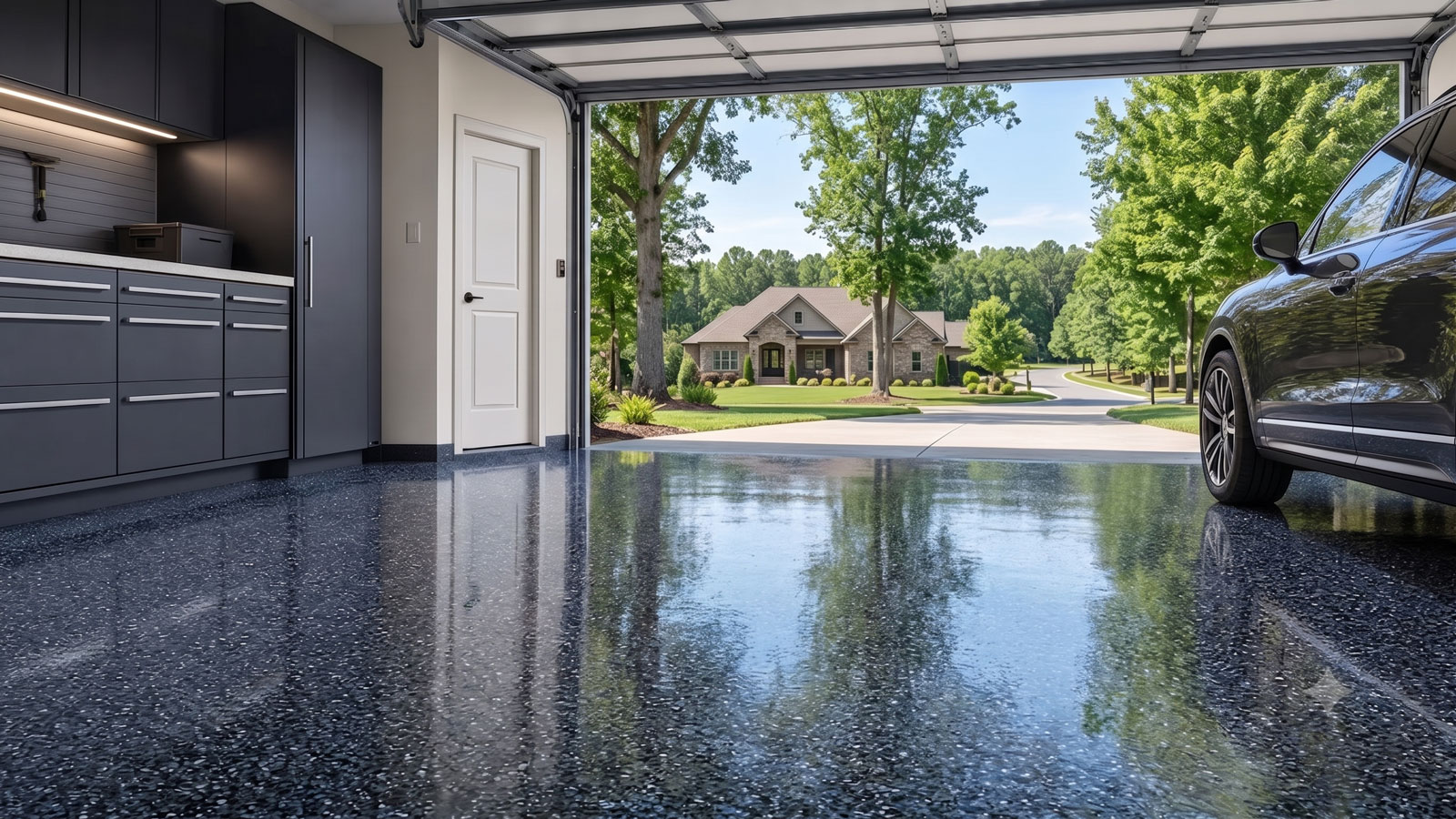
Garage Floor Coating in Farmington Hills, MI
Floor Coating Information in Farmington Hills, MI
Farmington Hills adopted a new Master Plan for Future Land Use in August 2024 after more than three years of planning and outreach. Its official announcement says the plan looks roughly fifty years ahead, addressing housing, transportation and community development. The city marked its own fiftieth anniversary the preceding year. These facts describe a community with established neighborhoods and continuing change, not a uniform generation of garage slabs.
Drainage is a specific planning consideration here. At the same August 2024 council meeting, the city acted on a Caddell Drain crossing near Nine Mile and Drake and a ten-mile Rouge Arm sanitary-drain project. Those are municipal infrastructure records, not evidence that any garage floods or contains internal moisture. The homeowner still needs to inspect driveway grade, roof-water discharge and the actual slab.
Winter deicing residue provides a second relevant issue for floors used for daily parking. On sound, mechanically prepared concrete, epoxy, polyaspartic or decorative flakes can improve cleanability, but they cannot prevent slush from arriving or repair structural movement. The quote should specify old-coating removal, repairs, moisture evaluation where needed, topcoat texture and when vehicles may safely return.
Local Market Insight
Farmington Hills adopted its 2024 long-range plan on August 12, including housing and transportation changes; the same council meeting addressed a Caddell Drain crossing and Rouge Arm sanitary-drain project. Those civic facts inform local context without diagnosing private garage moisture.
What Affects the Cost of Garage Floor Coating in Farmington Hills?
Existing subdivisions, later renovation and new finishes in Farmington Hills can create very different preparation needs. The right cost is based on actual concrete, previous paint and cracks, not the house's decade of construction.
Municipal drain improvements do not tell a contractor whether a garage is wet. The proposal should identify observed water issues separately and clarify grinding, repairs, finish selection and the cure schedule.
- Past coating and staining: A working garage may have automotive fluids, older epoxy or paint. Contamination and incompatible films need appropriate removal and preparation before a new finish can bond.
- Concrete age and structural condition: The city's housing spans decades, and garages can be modified independently of homes. Inspect patches, pitting, spalling and crack movement before choosing repairs.
- Road salt and winter melt: Michigan road-treatment practices mean slush, brine and grit can enter on tires. Clean deposits before coating and discuss long-term maintenance of the topcoat.
- Actual driveway and slab moisture: Drainage-infrastructure projects are public works, not property tests. Determine whether water arrives from rain, snowmelt, drainage or within the concrete before applying products.
- Garage configuration and access: Storage, attached steps, water heaters and narrow edges can change equipment staging and labor. Measure the whole floor and clarify who clears objects.
- Flake system and curing: Texture, UV-exposed edges, layer count and cold-season temperature limits affect price. Compare the complete system and vehicle downtime rather than only advertised topcoat chemistry.
Call for a clear, project-specific estimate—or request one online.
Farmington Hills' 2024 Master Plan and Renovated Garage Surfaces
On August 12, 2024, the Farmington Hills City Council approved a Master Plan for Future Land Use intended to guide a multi-decade period of change. City announcements describe more than three years of research and public input, with goals involving housing, nonmotorized transportation and neighborhood amenities. This planning history reflects an established city adapting to future needs; it does not identify the slab age of private garages.
In an older subdivision, garages may have undergone repeated repainting, repours or workshop use. A home's construction year does not prove when the garage floor was placed. Look at old sealers, paint adhesion, concrete strength and cracks. Where an old finish is failing, appropriate stripping and mechanical profiling should be part of the estimate.
A renovated garage may appear smooth and clean while retaining a curing compound or invisible sealer. The installer should verify suitability and explain grinding, repairs and any moisture evaluation required by the selected resin. Structural movement or ongoing wetness should not be covered with decorative material just to meet a schedule.
For homeowners comparing quotes, require descriptions of substrate observations and the whole sequence of removal, profiling, repairs, application, topcoat and cure. That makes bids comparable across different building eras and household uses.
The Caddell Drain, Winter Roads and the Property-Level Distinction
The Farmington Hills council's August 12, 2024 action summary includes a petition for improvements to the Caddell Drain crossing at Nine Mile and Drake and another sanitary-drain matter involving the ten-mile Rouge Arm. These are concrete documented infrastructure initiatives, but they are not flood assessments for an individual garage or evidence of a residential slab's moisture content.
The property inspection must instead determine whether water gathers at the overhead door, whether gutters direct runoff toward the slab, and whether dark interior spots persist after dry weather. Water brought in by cars during winter is another matter and is connected to regional road-salting practices documented by Michigan agencies.
A well-installed coating on appropriate concrete may make salt and grit easier to remove, but it cannot eliminate traffic residue, stop an exterior drainage problem or arrest cracking from movement. Winter cleanup and structural awareness remain necessary after installation.
Finish texture should balance grip for wet shoes and tires against routine cleaning. Ask about the temperature and moisture restrictions for the intended system, and plan parking and storage clearance around the complete cure schedule. These household details are more actionable than assuming city infrastructure projects imply a private concrete defect.
Frequently Asked Questions
Does a Farmington Hills drain project mean my garage is at risk?
No. Municipal work on particular drains addresses public infrastructure. A private garage needs its own inspection of driveway grade, water entry and slab moisture.
Can an older suburban garage receive a decorative-flake finish?
Often, if the concrete is sound and properly prepared. Prior paint, oil, cracks and moisture suitability should be assessed before choosing the system.
Does a coating prevent salt damage completely?
No. A suitable finish may simplify cleanup, but road salts and snowmelt still enter garages and should be removed routinely.
Will polyaspartic fix concrete that keeps cracking?
No. Ongoing movement or structural cracking requires appropriate evaluation and repair; changing resin chemistry does not stabilize a slab.
What should the Farmington Hills contractor document?
Ask for old-coating removal, grinding, crack treatment, moisture testing where relevant, full system layers, edge work, finish texture and the permitted time before parking.